Vorwerk—End-to-End Optimization of the Order-to-Cash (O2C) Process
Homepage
/

References

/
Industrie
contact person
Are you interested in more information?
Christopher Schreiner, Managing Partner bei EMPORIAS
Christopher Schreiner
Managing Partner
send E-mailset a MEETING
About us
More on this

Vorwerk – End-to-End Optimization of the Order-to-Cash (O2C) Process

The Vorwerk Group’s international subsidiaries are facing increasing demands for efficiency, scalability, and transparency in the order-to-cash (O2C) process. Structures in sales, customer service, accounts receivable management, and logistics that have evolved over time have led to heterogeneous processes and varying responsibilities among the European subsidiaries.
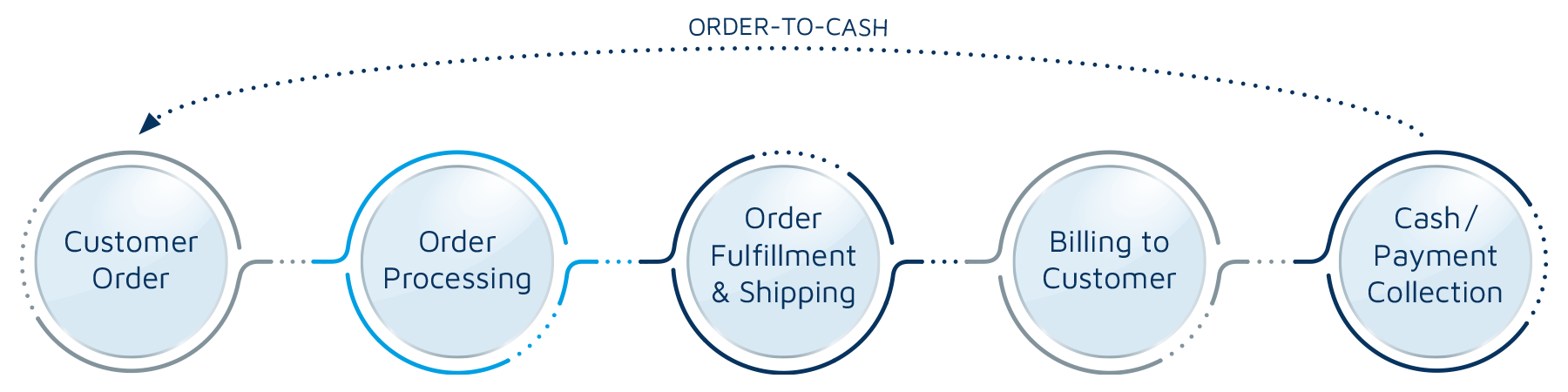
Order to Cash Prozess wird grafisch dargestellt: Customer Order, Order Processing, Order Fulfillment and Shipping, Billing to Customer, Cash/Payment Collection

Against this backdrop, Vorwerk partnered with EMPORIAS to conduct a structured, data-driven analysis of the O2C process using standardized KPIs, with the aim of identifying opportunities for efficiency gains and building a scalable organization for the long term. The objective was to create transparency regarding processes, workloads, and responsibilities, and to identify specific optimization strategies and opportunities for centralization.

Anke Kluger
VP Business Process Management (MbP) @Vorwerk Gruppe

“Together with EMPORIAS, we have succeeded for the first time in establishing a fully metrics-based management system for our order-to-cash process across multiple European subsidiaries. By integrating our various ERP systems into a central O2C dashboard, we were able to create new transparency regarding performance, process quality, and efficiency. Particularly valuable was the combination of data-driven analysis and pragmatic implementation, which enabled us to quickly implement concrete improvements with the country subsidiaries.”

Vorwerk – End-to-End Optimization of the Order-to-Cash (O2C) Process

Why
  • Heterogeneous Order-to-Cash structures in European subsidiaries
  • Lack of transparency regarding the end-to-end O2C process across the entire business area
  • Variations and a lack of standardization‍
  • Increasing demands for scalability, service quality, and cost efficiency
How
  • Development of an integrated, metrics-based analytics platform
  • Definition of a standardized KPI framework and harmonization of ERP data
  • Identification of opportunities for standardization, automation, and centralization
  • Establishment of a sustainable performance management system through a scalable reporting and dashboard concept
What
  • Creation of a uniform, transparent database
  • Identifying specific opportunities for efficiency gains through data-driven analysis and implementing quick wins
  • A foundation for further automation and AI-driven optimizations
  • Establishing a sustainable data-driven management model

Why – Background/Challenge
  • Historically evolved, heterogeneous order-to-cash structures in the Vorwerk Group’s European subsidiaries
  • Differences in customer service, accounts receivable management, credit checks, and logistics processes by country
  • Lack of transparency regarding activities, capacities, and responsibilities in the end-to-end O2C process
  • Duplicate structures and a lack of standardization lead to inefficiencies and increased resource consumption
  • Growing demands for scalability, service quality, and cost efficiency in an international environment as we strive to become the world’s largest direct sales company

How – Project Procedure
  • Development of an integrated, metrics-based analytics platform for the order-to-cash process across multiple European subsidiaries
  • Consolidation and harmonization of data from various ERP systems (SAP, AS400, local systems) into a central O2C dashboard based on Qlik Sense
  • Definition of a standardized KPI framework for end-to-end management of the O2C process (e.g., lead times, cost per order, collections performance, service levels)
  • A combination of top-down KPI analysis and bottom-up process mapping to validate the results and ensure operational feasibility
  • Identification of opportunities for standardization, automation, and centralization along the O2C value chain
  • Establishing the foundation for sustainable performance management through a scalable reporting and dashboard concept
What – Results & Added Value
  • Creation of a unified, transparent database covering all relevant O2C processes and countries (“single source of truth”)
  • Harmonization of processes and key performance indicators to improve comparability and manageability across countries
  • Identification of specific opportunities for efficiency gains through data-driven analysis, particularly in: Customer Service / Collections & Credit Management / Logistics & Warehousing
  • Identification and prioritization of quick wins and structural optimization initiatives
  • Laying the groundwork for further automation and AI-driven optimizations in the O2C process
  • Establishing a data-driven management model as a foundation for future transformations